Anthony Volatile / Volatile Solutions
VELT
Premium consumer commerce
+ membership brand.
01 / The opportunity
A product business needs more than a storefront.
The project adds a consumer-commerce signal to Anthony Volatile’s portfolio: a connected brand, merchandise system, discovery experience, purchase flow, and ownership relationship. The challenge was to make the whole journey feel like one considered company.
02 / Strategy & identity
Build around overlap. Keep the outside quiet.
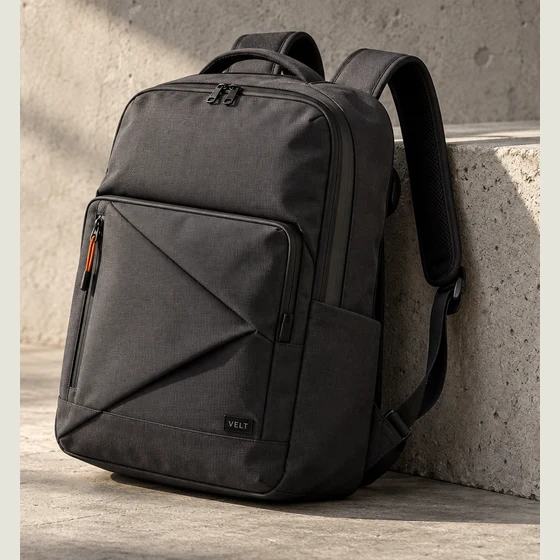
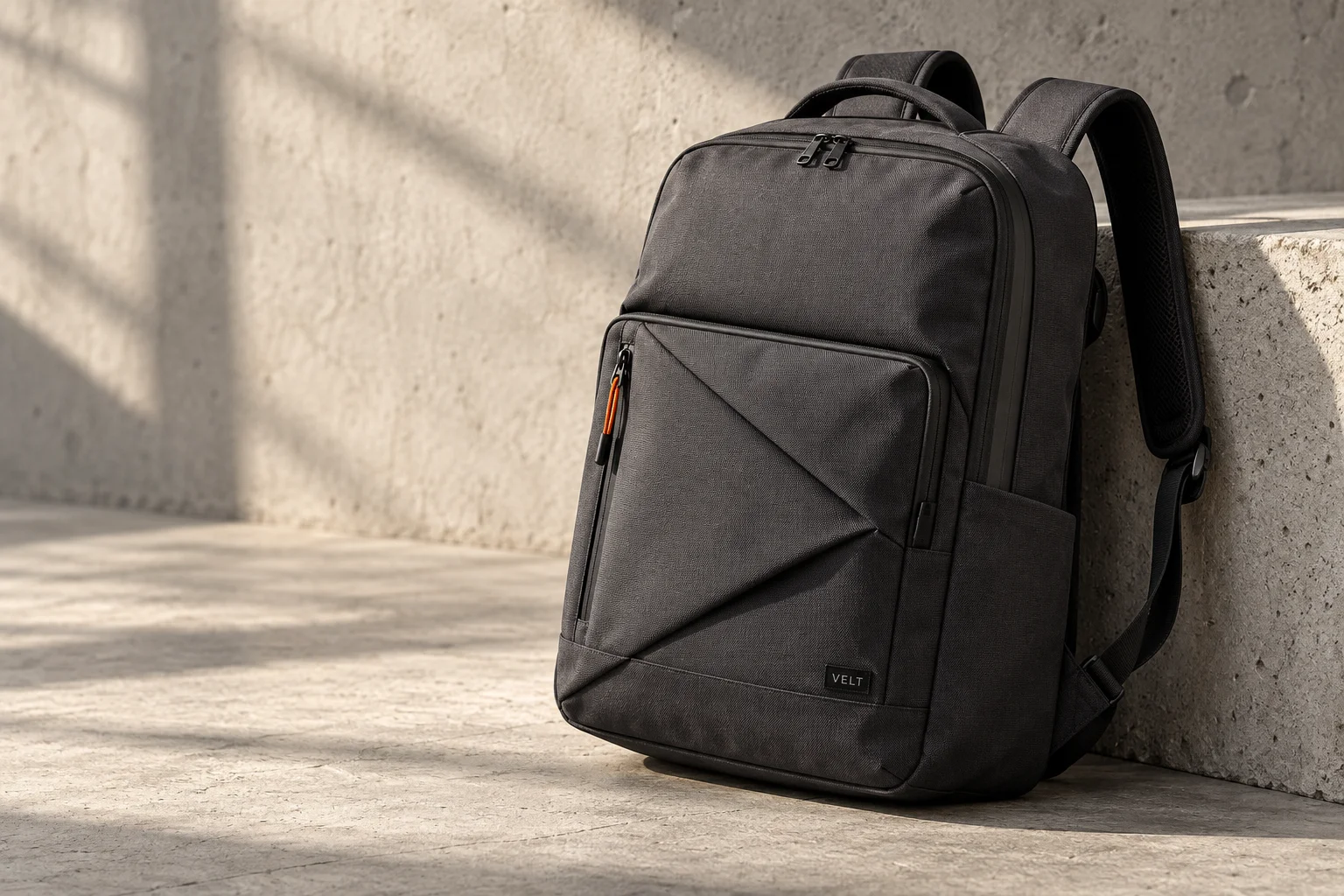
VELT addresses active professionals whose routines cross work, training, and short travel. A compact wordmark, folded V symbol, numbered product families, graphite palette, and restrained orange create recognition across objects, packaging, interface, and campaigns.
03 / Commerce
Make the product easy to understand, then easy to choose.
Twelve products share a typed catalog, specific copy, consistent specifications, availability states, and related objects. Product pages pair image galleries and variant controls with measurements, care, shipping, and honest policy concepts. The cart leads into a five-stage guest checkout with validation and a fixed fictional payment method.
04 / Discovery
Give the customer a reason for the recommendation.
Search matches names, categories, and uses. Filters narrow the catalog by routine, price, color, size, material, and stock. Comparison brings up to three objects into one table. The six-question finder ranks available bags through transparent local scoring and explains why its first recommendation fits.
05 / Membership & ownership
A relationship built on continued use.
In Use proposes a $48 annual program centered on a $40 repair credit, early access, and care. Local membership activation connects to a customer view with anniversary, credit, release previews, order history, saved objects, and preferences. Repair support remains available outside membership.
06 / Editorial
Useful content earns its place.
Four complete journal articles cover three-day packing, commuter-pack selection, technical-fabric care, and owning fewer bags. Five curated collections organize the catalog around routines. Material and policy pages separate proposed product specifications from verified claims.
07 / Campaign & lifecycle
One point of view, wherever it shows up.
Eight campaign territories extend into three social formats, four display sizes, four poster studies, and eight responsive email templates. The lifecycle connects consent-based consideration, one calm cart reminder, transactional status updates, care, repair, and a later membership invitation. No campaign was placed and no email was sent.
08 / Accessibility & build
The detail should hold up in use.
The implementation uses semantic landmarks, a skip link, labeled forms with field-specific errors, visible focus, native dialog focus containment, keyboard-operable controls, live cart feedback, reduced motion, and accessible horizontal comparison. Responsive CSS changes layouts for small screens, including a sticky product action.
09 / What was built
A reusable foundation.
A specific point of view.
- Next.js static export, React, TypeScript, and responsive CSS tokens.
- Centralized product, collection, editorial, membership, and campaign models.
- Persistent local cart, comparison, wishlist, preferences, profile, orders, and membership.
- Functional discovery, simulated purchase, repair enquiry, and ownership flows.
- Original AI-generated concept photography, local optimized assets, and identity SVGs.
- Downloadable campaign creatives, responsive HTML email previews, and portfolio export guidance.
No backend, real authentication, payments, fulfillment, marketing automation, or commercial performance metrics are represented.
A concept with a complete customer journey.
This is a self-initiated concept project created to demonstrate consumer brand strategy, commerce UX, merchandising, frontend development, campaign systems, and lifecycle design.